Showing posts with label movie. Show all posts

Tuesday, January 16, 2007

Video: Netflix to offer online movie viewing


From CNN:
Online movie rental service Netflix introduced a new feature Tuesday to allow customers to watch movies and television series on their personal computers and said it will make the new feature available to its subscribers in a phased rollout during the next six months.

Netflix (Charts) will continue to offer DVDs by mail to customers for a fixed monthly fee. They will have the additional option of instantly watching about 1,000 movies and television series on their PCs at no additional cost, according to the company's statement.

Customers using the service will have to perform a one-time installation of a browser applet that will take less than a minute. Then most subscribers' movie selections will begin playing in their Web browser in as little as 10 to 15 seconds after loading.

Movies can be paused and a position bar gives viewers the ability to jump to any point in the movie.

Internet connectivity with a minimum of one megabit per second of bandwidth is required. Faster connections are needed for better quality playback of the programming, with DVD quality possible with a three-megabit-per-second connection, according to the company.

The service will base the number of online viewing hours on a customer's plan. A client with the entry-level $5.99 a month plan will be able to watch movies online for six hours a month, while those with the full $17.99 a month plan that allows them to rent three DVDs at a time will be able to watch 18 hours a month online.

Tuesday, December 19, 2006

War Games 2 — The Dead Code

Sequel to the classic hacker movie, "Wargames":
Matt Lanter (”Heroes”) will star in the sequel to the 1983 film starring Matthew Broderick “War Games 2 — The Dead Code,” Stuart Gillard directs from a script by Randall M. Badat. Lanter plays computer hacker Will Farmer, whose world gets turned upside after playing an online terrorist-attack simulator game against a government super-computer designed to profile potential terrorists. All hell breaks loose when Homeland Security is convinced that he’s a terrorist intent on disrupting the fabric of society. Production starts November 20 in Montreal.

Wednesday, December 06, 2006

Stealing Fair Use, Selling It Back to You

"Apparently, Hollywood believes that you should have to re-purchase all your DVD movies a second time if you want to watch them on your iPod." That's what I said last week, commenting on the Paramount v. Load-N-Go lawsuit, in which Hollywood studios claimed that it is illegal to rip a DVD to put on a personal video player (PVP), even if you own the DVD.

Well, this week the other shoe dropped. According to an article in the New York Times:

Customers who buy the physical DVD of Warner Brothers’ “Superman Returns” in a Wal-Mart store will have the option of downloading a digital copy of the film to their portable devices for $1.97, personal computer for $2.97, or both for $3.97.
So you buy the DVD, and if you want a copy on your PVP or computer, you have to pay a second time. Despite the fact that you bought the DVD, and you have a DVD drive in your computer that is perfectly capable of making a personal-use copy. Imagine if the record labels offered you this "deal" for every CD you bought -- pay us a few dollars extra, and you can have a copy for your iPod. And a few more dollars, if you want a copy on your computer, too! As LA Times reporter Jon Healey puts it in his blog: "So from the perspective of the studios and federal officials, consumers have to pay for the privilege of doing the sorts of things with DVDs that they're accustomed to doing with CDs (and LPs and cassettes)."

This latest bitter fruit from Hollywood is brought to you by the DMCA, which treats "protected" content (like the encrypted video on DVDs), differently from "unprotected" content (like every audio and video media format introduced before 1996). Thanks to the DMCA, Hollywood believes fair use personal-use copies simply do not exist when it comes to DVDs.

Given that the Copyright Office has refused [PDF, see p. 71-72] to recognize any DMCA exemption for space-shifting, claiming that putting a DVD you own on your iPod "is either infringing, or, even if it were noninfringing, would be merely a convenience," (excuse me, Copyright Office, that's a decision for a court to make) the ball is now in Congress' court. Let's hope Congressman Rick Boucher is listening and will reintroduce his DMCA reform bill first thing next year.
We need to take Labels and Studios out of the equation. Take a look at the viral videos and music on the internet. They never went to a major record lable or signed a deal with a major movie studio or TV Network. By word of mouth these vidoes were able to get distributed. Thats the job of the Studios and Labels. If music and movies can become so popular virally, studios and labels can get removed out of the equation and the cost of this media can go way down. Also the producers of this content will get a much higher percentage of money earned on their media instead of 70-90% going to studios/networks/labels.

Friday, December 01, 2006

Hate going to movie theaters?

From Techdirt:

While we were impressed that the head of Regal Entertainment Group, the largest movie theater chain in the US, is experimenting with improving the moviegoing experience by giving certain customers a pager that will let them alert theater staff to any problems (such as mobile phone disruptions) in the theater immediately, it appears that CEO Michael Campbell still is unwilling to admit that movie theaters offer much value for visitors. That's because he continues to come out strongly against any studio plan to release DVDs concurrently with a theatrical release. The so-called "day and date" release plan has been finding increasing support within the movie industry, even if its most high profile test (done by Mark Cuban) was considered something of a failure.

The issue here is simple: it's about giving consumers a choice -- which is generally good for business. If you provide consumers with more options that cover what they want, they're more likely to buy. Giving consumers the chance to get a DVD right away, just as the full advertising effort is underway is likely to help the overall business of the movie as well. Some people who just don't like to go to theaters will buy the DVD, while others will prefer to see the film on the big screen. Unfortunately, few theater owners seem to agree. They complain about the DVD threat, when all it really shows is they don't understand their own business. They're not in the business of showing people movies. They're in the business of providing a good overall social experience. If they were confident in the theater experience, then they have nothing to fear from DVDs being on sale. They could just play up why it's that much better to see the movie on the big screen. But, apparently, they just don't believe they offer a very good product, which is why they're trying to pressure the studios to give them an artificial, temporary monopoly. Campbell's comments are effectively an admission that he doesn't think Regal Theaters are very good, and he doesn't think he can improve the experience enough to compete with home theaters. That seems excessively short-sighted.

If day and date releases became more common, it would only improve the movie going experience. While Campbell claims they would boycott those movies, it would only take a few missed blockbusters for the company to change its mind. In the meantime, it would put in place more incentives for Campbell and other theater owners to make going to the theater a much more enjoyable experience because they wouldn't just be competing with other theaters, but the home theater as well. They'd have to play to their strengths and focus on how to make "going out to the theater" a totally different experience from staying in to watch a movie. On top of that, there are plenty of additional things the theaters can do, from giving you a discount on buying the DVD as you walk out of the theater to using movie tickets as a way to encourage word of mouth marketing to get others to the theater. The potential is enormous, but we won't see much of it if theater owners can remain lazy and uncreative by keeping studios from giving customers the choice they deserve.

Monday, November 13, 2006

Movie studios selling $1.25 DVDs in China to Combat Piracy

From ArsTechnica:
The first studio to announce such a strategy was Time Warner, which said in August that it planned to start releasing cheap DVDs in China in an attempt to fight piracy. The movies were to be released on DVD soon after their theatrical release for about 10 yuan (approximately $1.25) apiece. 10 yuan is close to the typical price for a pirated movie in China. Time Warner hoped that the move would lure customers to buy their DVDs instead of illegal alternatives. The short amount of time between theatrical and DVD release in China was also meant to try to beat pirates in getting the DVDs out as quickly as possible.

Monday, October 23, 2006

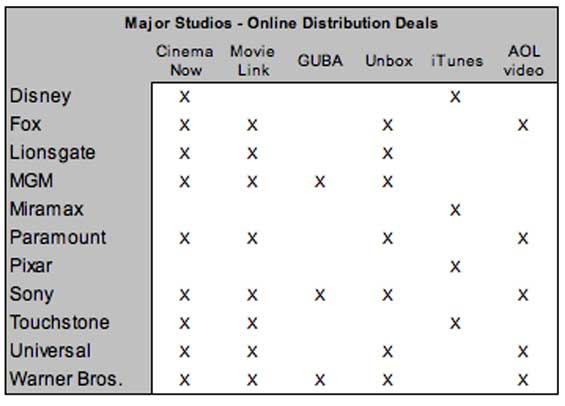
AOL to offer downloads for movie, TV shows

From Yahoo news:
NEW YORK - Movies and television shows from Paramount Pictures will be available for sale through AOL's new video portal under a deal announced Monday.

Classics such as "Breakfast at Tiffany's" and "Chinatown" and newer releases like "Mission: Impossible III" will be sold for $9.99 to $19.99 each, comparable to fees at online services CinemaNow, MovieLink and Guba as well as sites operated by MySpace-owner News Corp.

Consumers will own the movies and can transfer them to as many as three other computers or portable devices that support Microsoft Corp.'s Windows Media Player technology.

Monday, October 16, 2006

Movie Downloads: iTunes v. The Rest

From Techcrunch:
Our recommendations: If you are on a Mac, your only choice is iTunes. For Windows users, Movielink has the deepest catalog, and Guba has the best pricing (they are actually taking a loss on sales). CinemaNow has an outrageously priced burn-to-DVD product that may be attractive to some users (although simply buying the DVD seems to make a lot more sense).

Additional notes: All services except iTunes had rental agreements allowing users to rent a movie for 24hrs from pressing play or 30 days, whichever comes first. The number of movies in catalogs were taken either from company numbers or number of movies accessible on the site (these numbers fluctuate). The top 10 movie rentals drawn from IMDB data were: “The Sentinel”, “Take the Lead”, “Poseidon”, “Friends with Money”, “RV”, “Inside Man”, “Akeelah and the Bee”, “Scary Movie 4”, “Silent Hill”, and “Just My Luck”.

When trying out the services, I found the $0.99 rental from GUBA to be the best choice. It was cheap enough that I didn’t mind spending the time downloading a movie and deleting it after I was finished. Renting from the other services just didn’t seem a fair deal at $2.99 or $3.99 with Blockbuster down the street and Netflix in my mailbox. I can’t believe that most of these services expect me to pay the DVD price for a movie that hogs my hard drive, comes with a highly restrictive license, and sucks up my bandwidth for 1-2 hours of downloading. However, in the long run I choose iTunes as the service to watch. Their catalog is a lot smaller than the other services, but they offer the most value with their digital movies by easily integrating with my iPod and granting me more licenses. For now, I think I’ll continue using DVDs to archive my favorite movies, but rent digital versions of the ones I just want to see once. What I’d really like to see in this category is a digital Netflix service that automatically rents, downloads, and deletes movies from my computer for a flat monthly fee.

Thursday, October 12, 2006

First movies shot in 1080p heading for Blu-ray, HD DVD

From Tomshardware:
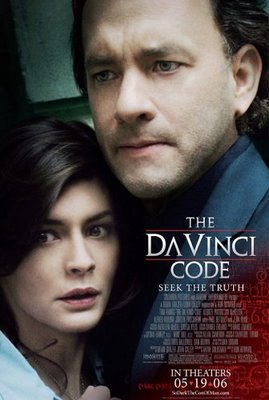
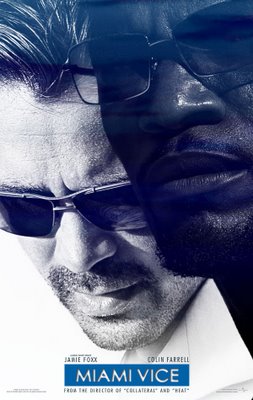
Hollywood (CA) - In time for the holiday shopping season, movies that were shot in high-definition format are heading for both next-generation DVD formats. The Da Vinci Code and Miami Vice will set the groundwork for a library of high-definition movies with a 1080p resolution (1920x1080 progressive).

On 14 November, Sony Pictures movie The Da Vinci Code will be released on DVD and Blu-ray. The Blu-ray format will take advantage of the fact that it was one of the first major movies to be shot entirely in 1080p. This means that, especially for those with 1080p HDTVs, the film's resolution will be optimal for the high-definition disc format.

While HD DVD and Blu-ray media offer a native 1080p resolution, all of the motives available today were not created in that resolution. However, since these movies weren't recorded in such a resolution, the up converting process makes educated guesses as to what would be in the additional pixels. With 1080p recording, every single pixel is recorded when the film is shot.

This transition is also happening with the other new high-definition format, HD DVD. Today, at Digital Life 2006 in New York, Universal Studios Home Entertainment announced that Miami Vice, the 2006 movies based on the 1970s TV show, which was also shot in true 1080p format, will be released on HD DVD on 5 December.

The movie will take advantage of one of HD DVD's unique features, which is the ability to have an HD DVD encoding on one side of the disc and a regular DVD on the other side. The HD DVD release of the movie will have the true 1080p format of the unrated version of the movie on the HD DVD side and the R-rated, standard definition resolution of the movie on the DVD side.

The transition to true, native 1080p movies is reminiscent of the transformation from analog to digital media. In the late 1980s and early 1990s, when audio cassettes were being replaced by CDs, it took a while for the complete and total transfer from analog to digital recording and editing. Now that virtually everything is digital, there are still paradigm leaps to take, such as the conversion of standard definition to high-definition.